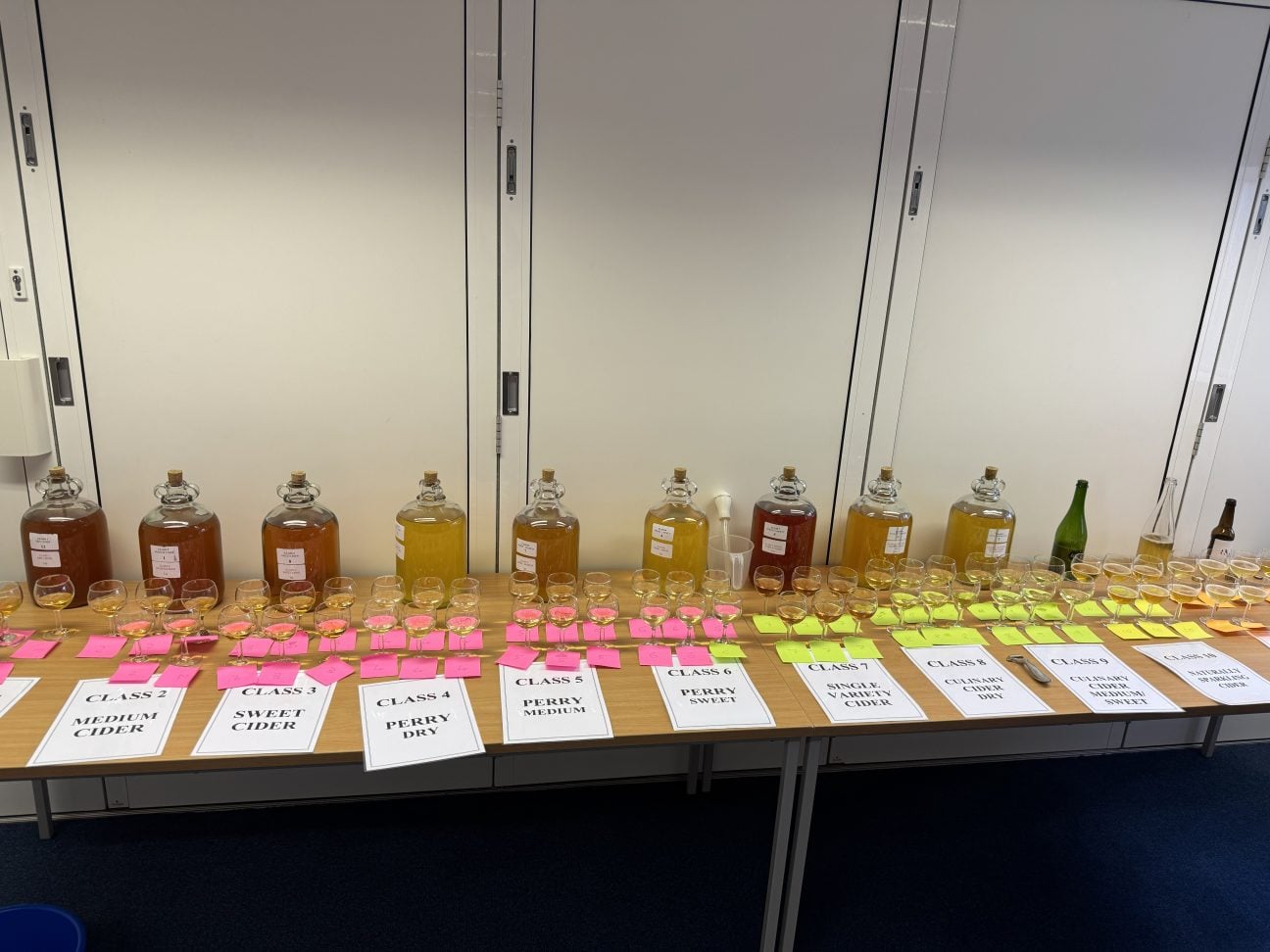
Hereford’s Museum of Cider hosted its International Cider & Perry Competition last month, naming a single variety, Foxwhelp cider from Henhope Cider, the Best in Show.
Celebrating the craft, tradition and ongoing practice of cidermaking in the UK and beyond, the awards were first held in the early 1980s – in line with the charitable trust’s mission when it opened the museum in the former Bulmer’s factory.
This year, 125 entries from 33 cidermakers across England, Wales, Germany and Hungary entered the awards, judged by a panel of cidermakers, consultants, retailers and journalists.
“Every single product is assessed to the same standard, regardless of who made it, where it’s from or what its scale is,” Gabe Cook, cider author, educator and recently-appointed chair of judges, told FFD.
13 categories included classic dry, medium and sweet for both perry and cider, as well as classes for naturally sparkling styles and one for speciality – grouping entries made with traditional techniques like keeving and bottle conditioning.
Though the Best in Show cider isn’t available to buy, other class winners were Dee Cider from Flintshire in Wales’ 6% flagship cider, named best in the dry class, and Gregg’s Pit, which earned the top spot for dry perry. Rosie’s Triple D took this year’s sweet cider title, while Ross-on-Wye Cider and Perry’s sweet perry topped that category. Newton Court’s special keeved cider was awarded best in the speciality class.
For independent retailers, the awards are a showcase of rising talent and established quality in the world of cider and perry.
“It’s really lovely to see small-scale producers compete alongside some of the best-established names in the cider world, sometimes going on to win,” Elizabeth Pimblett, Museum of Cider director said. This kind of recognition can open doors for them from a commercial perspective, but, she added, “there’s also an educational side, so that people are learning about how to better their products.”
Cook said the UK is currently experiencing “growing public interest in cider”, which he linked to the increased appetite for “food & drink, rural traditions, and sustainability”.
Despite a very poor harvest year for perry pears, this year’s entries, he added, included “the highest quality and selection” of naturally sparkling ciders and perries he could recall. “It had a great range and differentiation. It was amazing.”
To discover the full list of winners in this year’s competition, visit
cidermuseum.co.uk
This article first appeared in the June-July 2025 issue of Fine Food Digest.