British raw milk cheese has been given a timely boost by a new dairy at the School of Artisan Food on the Welbeck Estate, which uses the same unpasteurised milk as Stichelton.
Nottinghamshire-based Primrose Creamery, founded by 33 year-old cheesemaker Jake Goldstein, started production at the end of last month, with two raw cows’ milk lactic cheeses, called Lindley and Eggleston. The decision to use raw milk, sourced from the same herd that supplies fellow Welbeck-based business Stichleton, is an unusual move at a time when many British soft cheesemakers now pasteurise due to regulatory and cost pressures.
“Raw milk uses less energy and is more sustainable because I don’t have to heat and then cool the milk again, and it’s definitely something that interests wholesalers, retailers and the public,” said Goldstein, who previously worked at Monkland and Neal’s Yard Creamery in Herefordshire. “The changing flavours of raw milk throughout the year are something to be embraced and enjoyed.”
Goldstein produces around 600 cheeses a week, selling at farmers’ markets and to around 12 retailers, including Welbeck Farm Shop. Discussions with wholesalers are ongoing. The School’s dairy, which has long been used for teaching cheese classes, has capacity for around five times the current production. Classes will continue at the school, with Goldstein teaching alongside consultant Ivan Larcher.
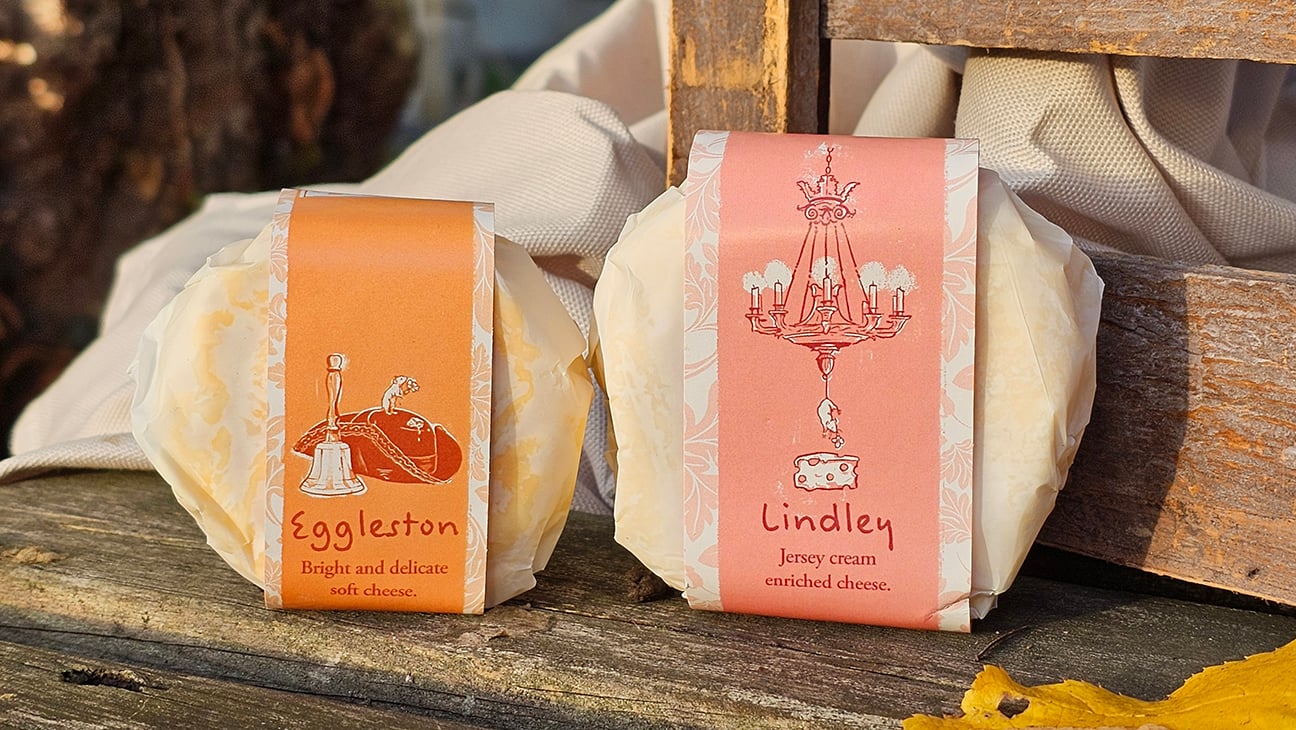
Weighing 150g, Lindley is a triple cream cheese with a velvety rind, made with the addition of raw Jersey cream. Eggleston (100g) is a yeast-ripened cheese with a thin annatto-washed rind. Colwick, a local soft cheese with a dimple at the top, will be launched next year.
Branding for the cheeses features a recurring image of a mouse and images that reference their origins. Lindley is named after Elizabeth Lindley, a dairymaid who worked at the estate in the 19th century, and features the chandelier that used to hang in the old dairy. Eggelston is named after William Eggleston, a Nottinghamshire farmer who lost his life in a cheese riot in 1766.
“I’m not trying to reinvent cheese,” said Goldstein, “but I do believe tradition only stays alive when you keep building on it. What I’m doing is rooted in the old ways, but it also looks forward, using what we know now to make something expressive, balanced, and alive.”
This article first appeared in the December 2025 issue of Fine Food Digest.